Christmas Pet Safety Tips
December 8, 2025
Quick Tips for a Hap-Hap-Happy Holiday
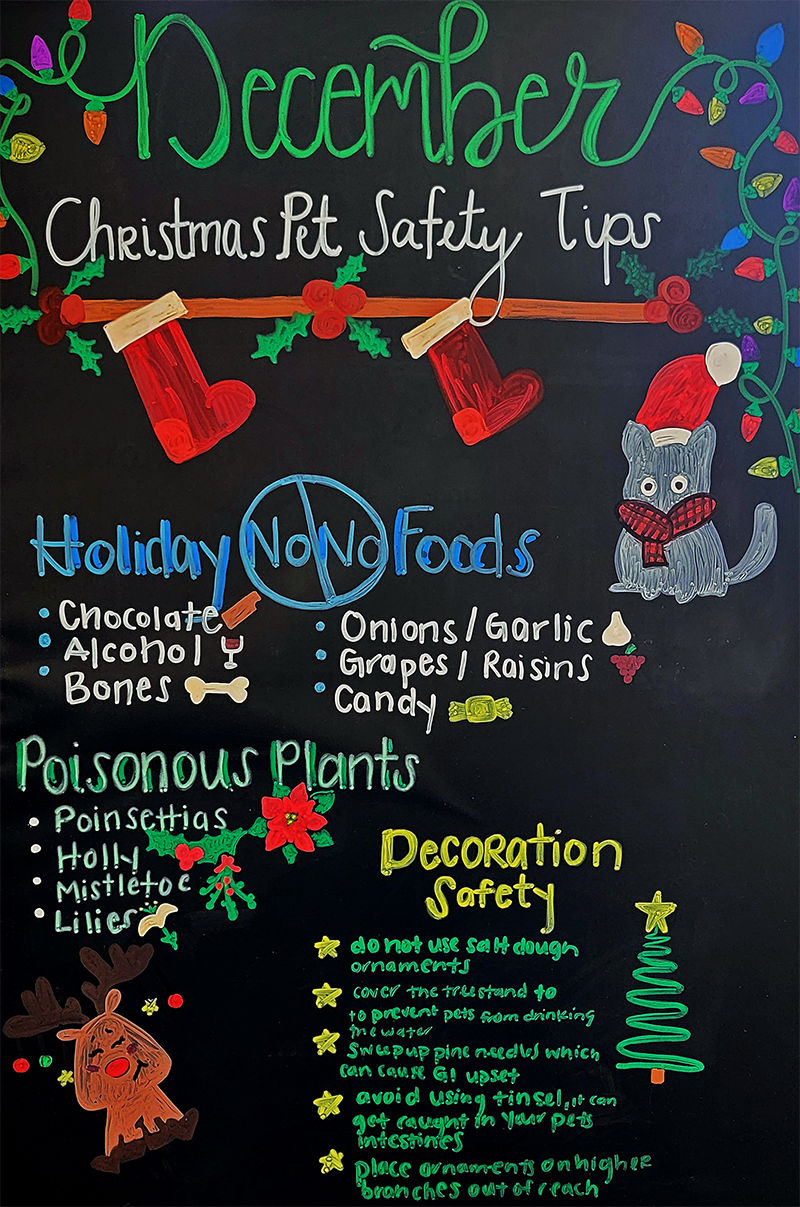
Holidays are a delightful change of pace, with their own special decorations and foods. As you’re changing up your family’s routines, keep these simple tips in mind to make your home a safe environment for your pets.
Holiday No-No Foods
These foods are toxic for our cats and dogs. Don’t feed any of these items to your pets, and remind your guests to ask before feeding your pets anything.
- Chocolate
- Alcohol
- Bones
- Onions/garlic
- Grapes/raisins
- Candy (some kinds are toxic, but all candy is unhealthy for your pet)
Poisonous Plants
Real plants are beautiful, but many of them are also toxic if ingested. Here are four common Christmas plants that you should substitute with artificial alternatives:
- Poinsettias
- Holly
- Mistletoe
- Lilies
Decoration Safety
Who doesn’t love a festive Christmas tree? Well, sometimes your cat or dog might love it too much. Keep these decoration safety tips in mind:
- Do not use salt dough ornaments
- If enjoying a real tree, cover the tree stand to prevent pets from drinking the water
- Regularly sweep up pine needles, which can cause GI upset if ingested
- Avoid using tinsel. It can get caught in your pet’s intestines, which is a dangerous emergency
- Place ornaments on higher branches, out of your pet’s reach
Another health tip for the holidays is keeping your pet up-to-date on their check-ups. If it’s been awhile since your cat or dog has been in for a wellness visit, contact us.
Read More
4 Ways to ID Your Pet for Peace of Mind
July 7, 2025
What You Do Today Will Help You Find a Future Lost Pet
Tragically, lost pets are more common than anyone would like. In an ASPCA study, 15% of owners said they have reported a lost dog or cat before. Taking these four prevention steps increase the odds of being reunited with your pet if they ever become separated from you:
- Microchip your pet
- Collar your pet
- License your pet
- Vaccinate your pet
1. Microchip Your Pet
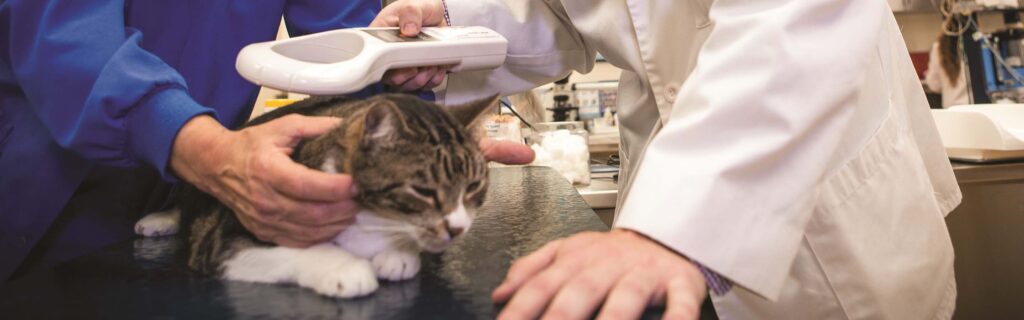
The newest and safest way to ID your pet is with microchipping. A microchip is encased in a tiny glass cylinder and injected under your pet’s skin. When a scanner is passed over the chip, a number comes up. That number is a serial number associated with your registration information. Most veterinarians, shelters and dog wardens have microchip scanners to help reunite pets and their people.
Here’s a good resource for information about microchipping: “Check the Chip! Make Sure Your Pet’s Microchip is Up-to-Date.”
2. Collar Your Pet
A pet wearing a collar signals to the world that the pet has a home and someone out there loves them. Although microchipping is the most efficient way to have your pet returned to you, it’s not visible like a collar. Also, it can give a pet rescuer something to hold onto, to keep your pet from running away.
Many people purchase custom collars with their pet’s name, their name and phone number embroidered on it.

Along with the collar itself, there are two specific tags that should be attached to the collar, which we explain below.
3. License Your Pet
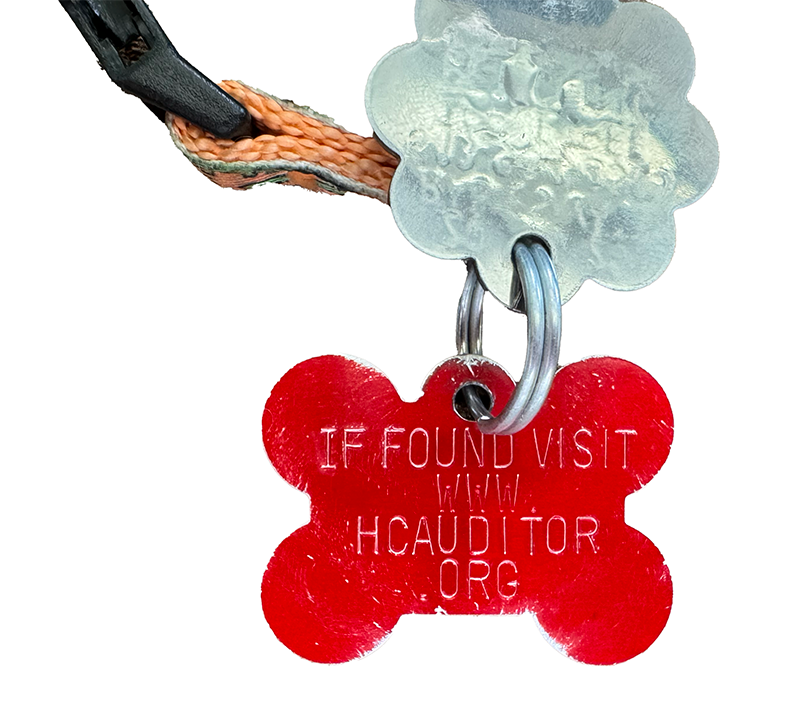
Licensing your pet with the county is the law, and it can help your pet be returned to you if they become lost. Add your pet’s license tag to their collar, and it identifies them with a number. In Hamilton County, people are directed to a website if they find a lost pet. Here’s what the back of that tag looks like:
And here are dog license websites for the counties surrounding Companion Care Animal Hospital:
4. Vaccinate Your Pet
When a lost pet is vaccinated and wears their rabies tag on their collar, people have more confidence that this pet is safe to help. Ohio counties enforce the law that all dogs, cats and ferrets three months of age and older be vaccinated against rabies.
Also, the rabies tag issued by your veterinarian has their identification and phone number imprinted on it. Here’s a sample tag that Companion Care Animal Hospital issues when we vaccinate a pet for rabies:
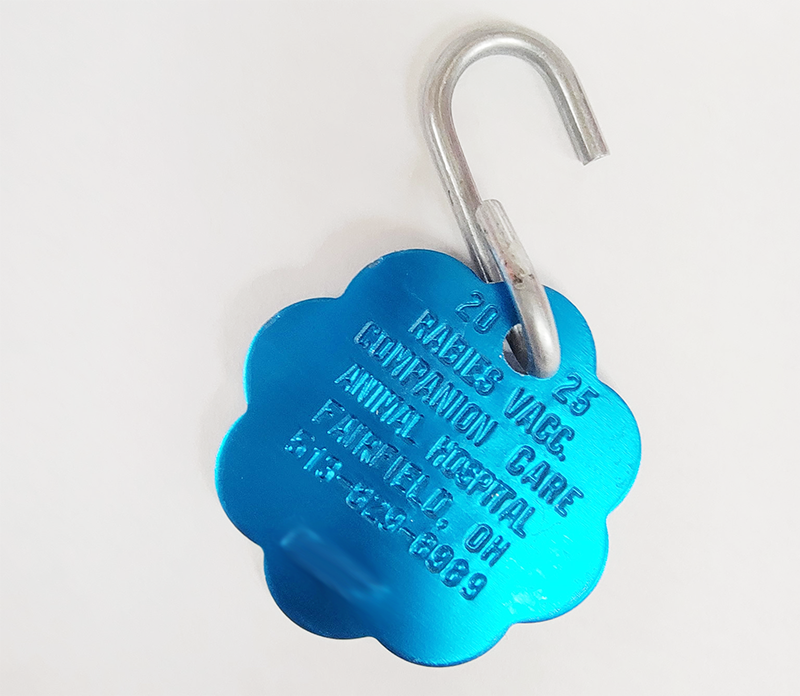
If all other methods of identifying your pet fail, a Good Samaritan can reach out to your veterinarian to locate you.
We hope your pet never escapes and becomes lost. But it sometimes happens. Following the four ways to ID your pet greatly increase the chances of being reunited. You may also want to read “16 Basic Steps to Prevent a Lost Pet.”
Read More
Poison Prevention for Pets
March 5, 2025
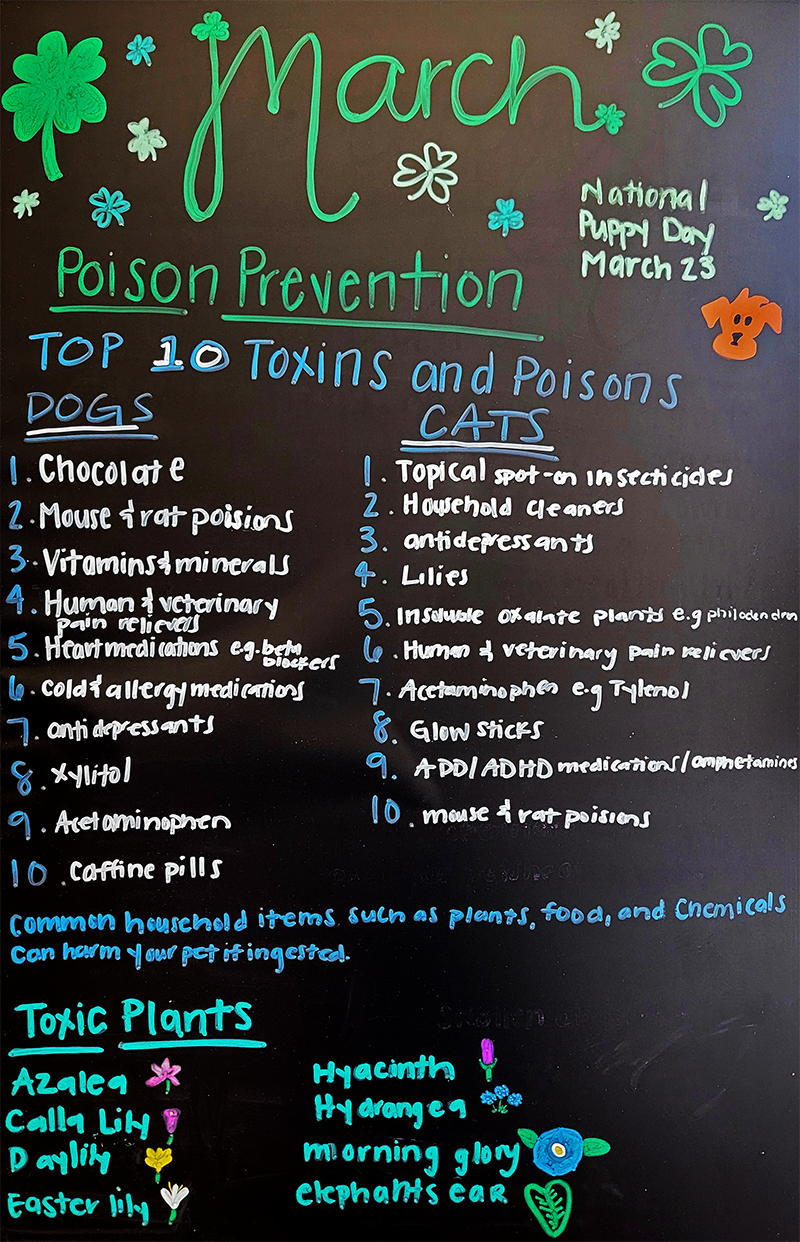
March is Poison Prevention Month
Let’s work together to promote safe and healthy environments for our pets! Many top toxins and poisons overlap for dogs and cats, but there are some differences. Here are the top 10 for each.
Top 10 Toxins and Poisons for Dogs
These are the most common toxins that affects dogs. Please keep these items where your dog cannot get to them.
- Chocolate
- Mouse and rat poisons
- Vitamins and minerals
- Human and veterinary pain relievers
- Heart medications, e.g., beta blockers
- Cold and allergy medications
- Antidepressants
- Xylitol
- Acetaminophen
- Caffeine pills
Top 10 Toxins and Poisons for Cats
Cats are most commonly-affected by these 10 toxins. Use this knowledge to keep your cats safe and healthy.
- Topical, spot-on insecticides
- Household cleaners
- Antidepressants
- Lilies
- Insoluble oxalate plants, e.g., philodendron
- Human and veterinary pain relievers
- Acetaminophen, e.g., Tylenol
- Glow sticks
- ADD/ADHD medications/amphetamines
- Mouse and rat poisons
Top 8 Toxic Plants
Many common plants are toxic to pets, especially cats. It’s safest to keep these top plants out of your home:
- Azalea
- Calla lily
- Daylily
- Easter lily
- Hyacinth
- Hydrangea
- Morning glory
- Elephant’s ear
Recently, we shared 2024’s Top 20 Pet Poisons, which is another helpful resource. You may also want to refer to our Top 30 Toxic Plants for Cats & Dogs.
Read More
8 Steps for Wonderful Winter Walks
January 20, 2025
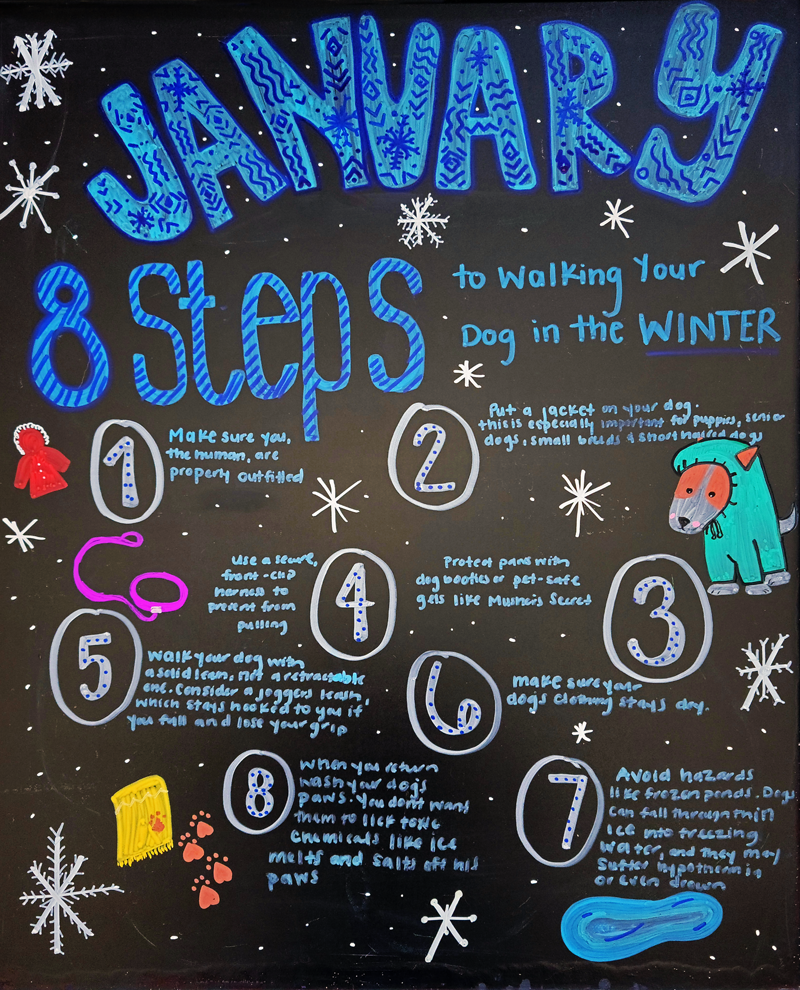
Keep You and Your Dog Fit (and Safe) on Winter Walks
In keeping with many New Year’s Resolutions to get healthier, January is National Walk Your Dog Month. It may seem like the worst time to get out into the great outdoors with your pet, but following these 8 steps will keep you both safe and warm.
- Make sure you, the human, are properly outfitted for the cold. Gloves are especially important when holding a leash!
- Put a jacket on your dog. This step is especially important for puppies, senior dogs, small breeds and short-haired dogs.
- Protect paws from ice and de-icing chemicals with dog booties or pet-safe gels like Musher’s Secret.
- Use a secure, front-clip harness to prevent your dog from pulling. This is safer for everyone in slippery conditions.
- Walk your dog with a fixed leash, not a retractible one. Consider a jogger’s leash, which stays hooked to you, if you fall and lose your grip.
- Make sure your dog’s clothing stays dry. Or cut your walk short if it becomes damp or wet.
- Avoid hazards like frozen ponds. Dogs can fall through thin ice into freezing water. They may suffer hypothermia or even drown.
- When you get back, wash your dog’s paws. This keeps them from licking toxic chemicals like ice melts and salts off of their paws.
Have fun exploring the winter scenery with your dog! But remember, if the weather is particularly nasty, wait until another day. Cuddling by the fire with your dog doesn’t burn calories, but it is good for the soul.
For more tips, check out our article, “Keep Your Pet Safe this Winter.”
Read More
Skip the Scares for Your Pet This Halloween
October 14, 2024
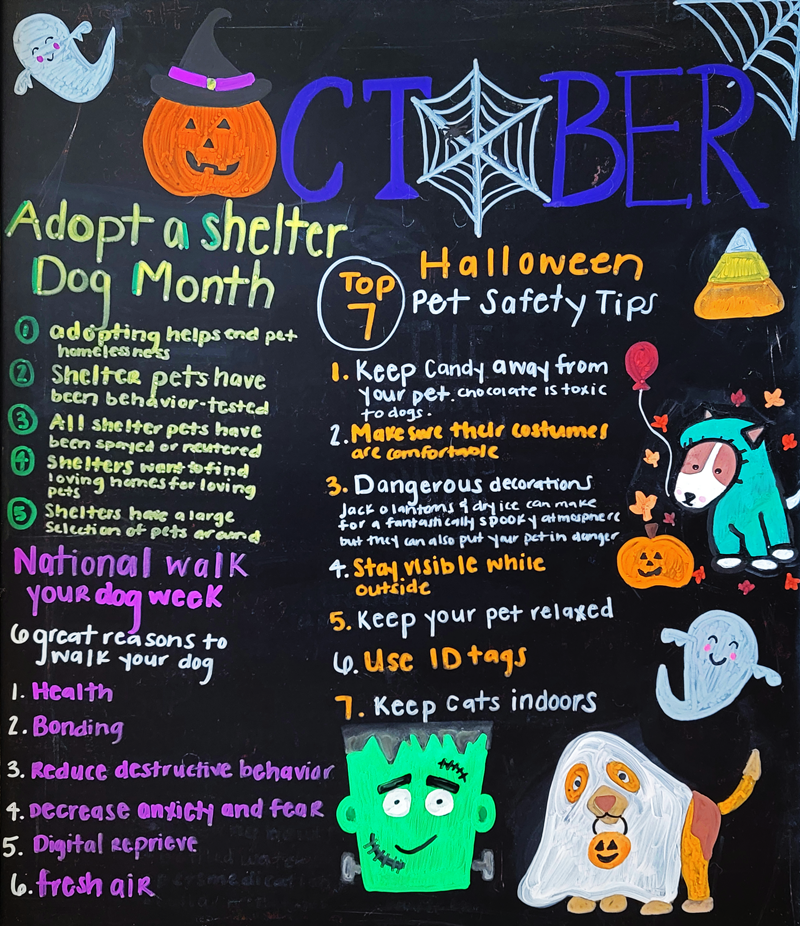
Pet Safety Tips to Keep Your Pet Safe & Sound
Spooky season is here, and people love it! About 60% of Americans celebrate Halloween. But 0% of pets enjoy being frightened, so let’s review some safety tips.
Candy is Never Good for Pets
For the health and safety of your cat or dog, keep all candy away from them. Chocolate candy or sugar-free candy are toxic, while sticky candies can become stuck in teeth or digestive tracts. Here are some tips to help your pet avoid the candy:
- Make sure your kids understand that sharing candy with pets is dangerous
- Put the trick-or-treat bowl out of reach of your pet
- Store bags of candy in a cabinet your pet can’t reach
- If you have your leashed dog at a Halloween event, watch the ground for dropped candy
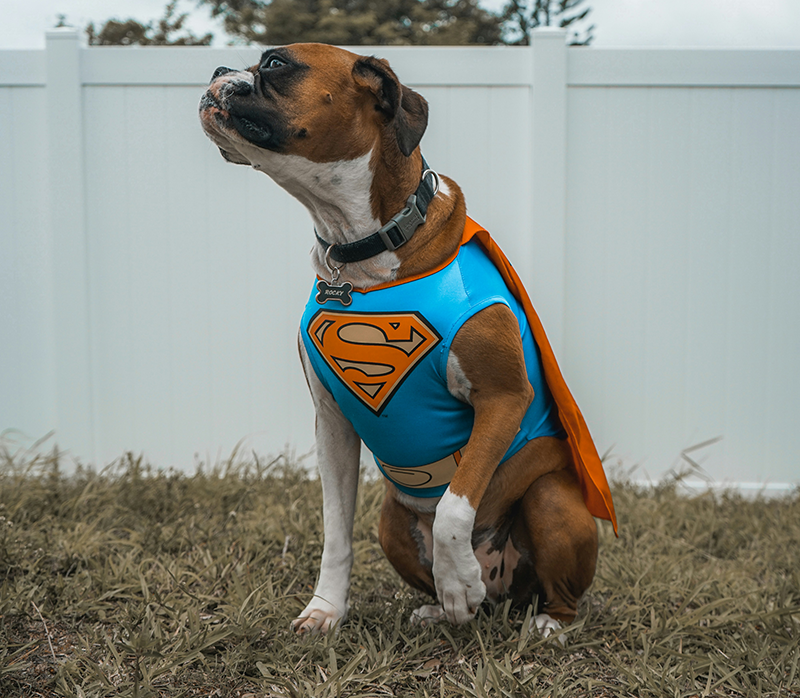
Costumes Aren’t for Every Pet
We love seeing dressed up dogs and cats as much as anyone– they are just so cute in costumes! But not every pet wants to join in the fun. If your pet resists wearing a costume, don’t force it. Here are more costume guidelines:
- Don’t put a mask on your pet for any length of time, even if your pet doesn’t seem to mind. Just long enough to snap a cute pic.
- Choose a comfortable costume that isn’t too tight and allows normal movement (walking, sitting, lying down).
- If your pet shows any discomfort or irritation, remove the costume right away
Home is the Safest Place
Halloween celebrations often happen at night, with large crowds. This experience isn’t for most pets, who are safest and happiest indoors at home. If you’re welcoming trick-or-treaters or going to a party, create a safe space in your home where your pet won’t come face-to-face with strangers.
For more Halloween safety tips, check out these articles:
Wishing you and your pet a happy and safe Halloween!
Read More
National Food Safety Education Month for Pets
August 28, 2024
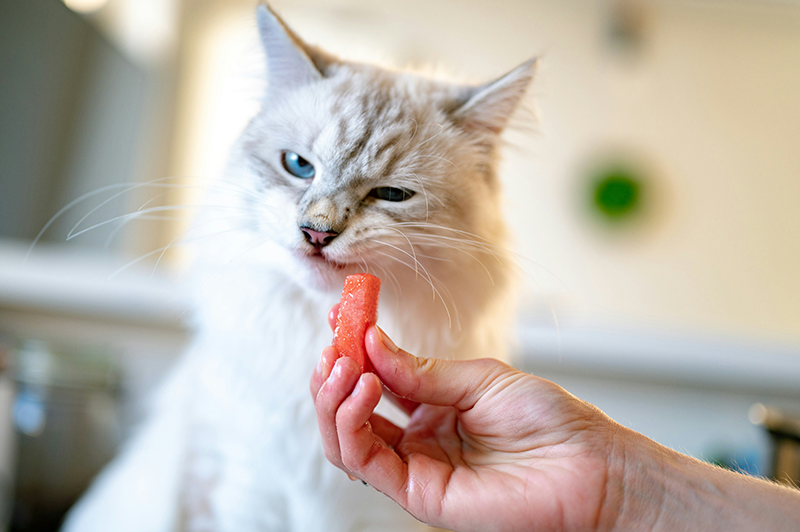
A Guide to Feeding Your Pet Safely
For National Food Safety Education Month in September, we’re shining a spotlight on feeding cats and dogs safely. We’ll cover common toxins, along with the “raw food” trend.
Raw Food Diet: It’s Not Worth the Risk
We’ve shared information about Raw Food Diet for Cats and Raw Food Diet for Dogs before, and our recommendation for both is the same: the risks outweigh any potential benefits. Both dogs and cats face these significant dangers:
- Nutritional deficiencies: With raw food, it’s nearly impossible to give your pet the balance of nutrients they need for good health. Commercially-manufactured pet food actually is formulated for pets’ dietary needs. There’s an important balance between fat and protein, along with nutrients like vitamin A, vitamin D, zinc, copper, taurine, calcium and carbohydrates.
- Foodborne illnesses: We cook raw meat for a reason. From slaughtering to butchering to storage in the grocery store fridge, there’s plenty of opportunity for raw meats to grow dangerous bacteria like Salmonella orListeria monocytogenes. These bacteria can cause serious illness or death in both animals and the people who feed them.
- Choking or punctures: Our modern cats and dogs just aren’t designed to chew and eat raw or cooked bones. Choking and punctured intestines are all too likely and often have tragic results.
Foods that Are Dangerous to Pets
Our furry friends have different nutritional needs than humans, and many foods that are perfectly safe for us can be toxic or dangerous to dogs and cats. We all love to share human food with our pets, but we caution you to keep these ingredients away from your pets in both raw and cooked form.
- Alcohol
- Avocados
- Bones – cooked or raw
- Caffeine
- Candy or gum
- Chocolate
- Garlic
- Grapes
- Green tomatoes
- Marijuana
- Mustard – seeds, powder or the condiment
- Nutmeg
- Nuts
- Onions
- Raisins
- Raw potatoes
- Raw yeast dough
- Sage
- Xylitol – an artificial sweetener
We’d also like to point out that most cats become lactose-intolerant as they age.
We hope this information will help keep your pet safe from food dangers. Check out our Pet Poison Prevention Resources for more information on toxic plants, medications and more.
Read More
5 Pet Safety Tips for Easter
March 18, 2024
Enjoy a Safe Holiday!
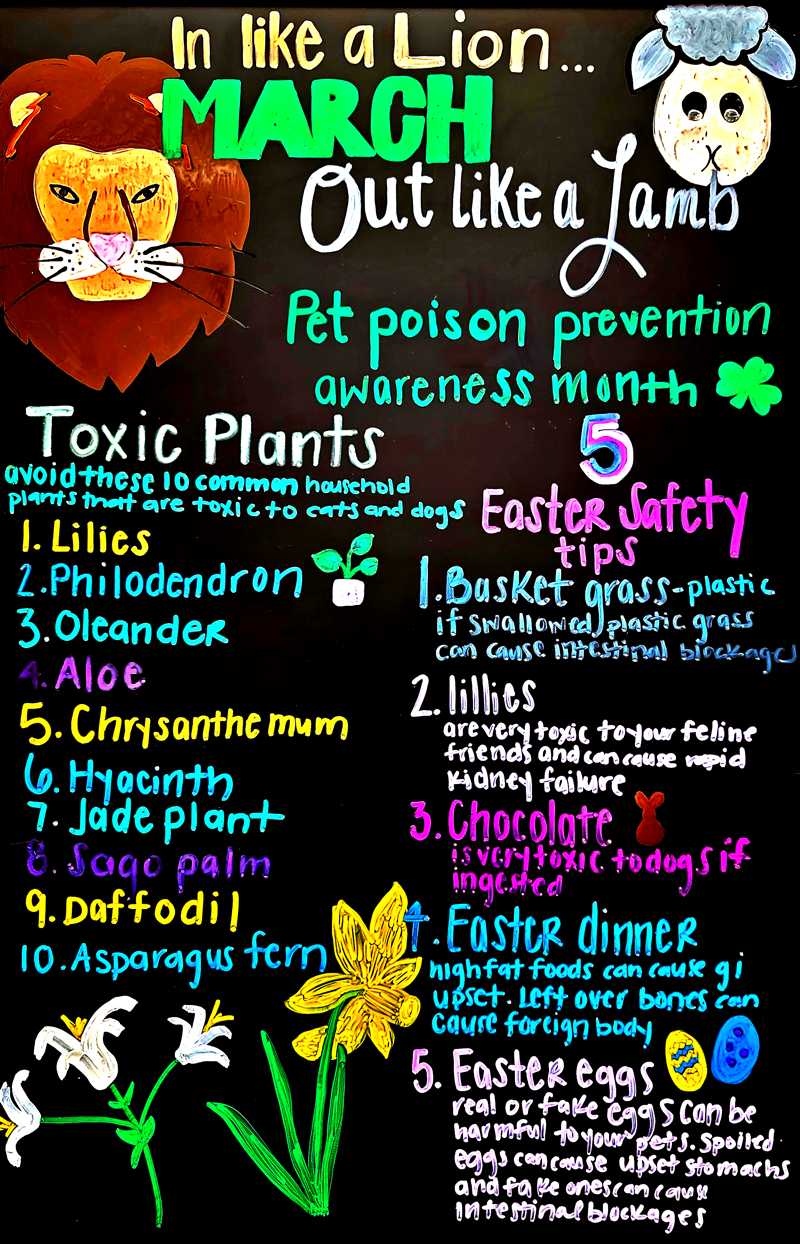
Easter is early this year, so it coincides with Pet Poison Prevention Awareness month in March. Keep these five tips in mind as you plan your celebrations.
- Plastic basket grass: If your pet swallows plastic grass, it can cause intestinal blockages.
- Lilies: These plants are very toxic to your feline friends and can cause rapid kidney failure.
- Chocolate: This food is very toxic to dogs if ingested.
- Easter dinner: High-fat foods can cause GI upset. Leftover bones can cause foreign body (an object that becomes stuck in your pet’s body that shouldn’t be there).
- Easter eggs: Real or fake eggs can be harmful to your pets. Spoiled eggs can cause upset stomachs and fake one can cause intestinal blockages.
10 Common Plants Toxic to Pets
Know these common plants that are toxic to cats and dogs. We recommend that you don’t keep the in your home.
- Lilies
- Philodendron
- Oleander
- Aloe
- Chrysanthemum
- Hyacinth
- Jade plant
- Sago palm
- Daffodil
- Asparagus fern
You may also want to check out “Top 20 Pet Toxins in Ohio.” Let’s enjoy spring with our pets, and keep everyone safe.
Read More
2023’s Top 10 Pet Poisons
December 13, 2023
From Unexpected (Marijuana) to Perennial (Chocolate), Here are the Most Common Pet Toxins
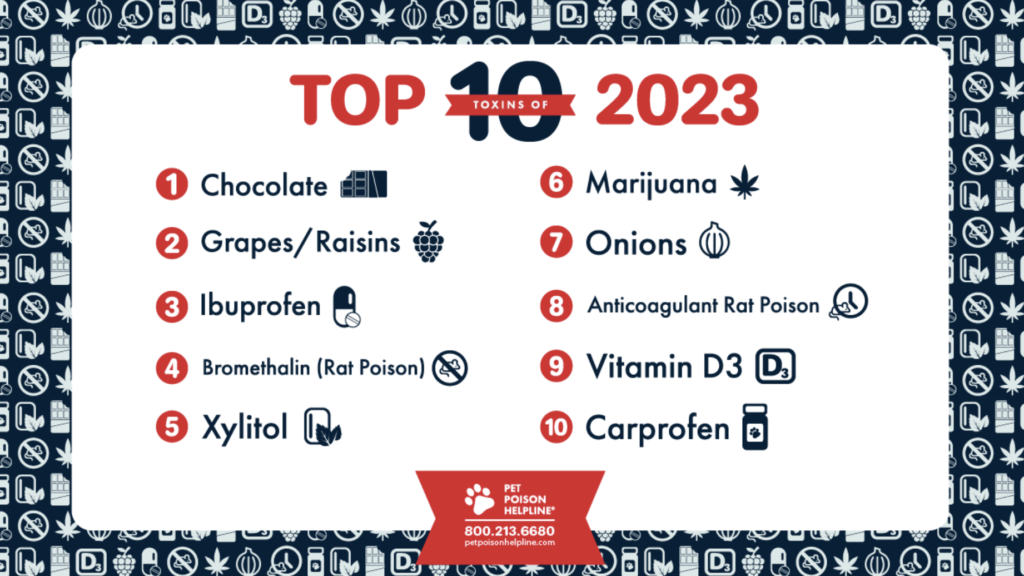
The Pet Poison Helpline released its Top 10 Pet Poisons for 2023, and there are some notable entries for pet parents to be on the lookout for. Here’s the list, which takes into account all species of pet.
Marijuana Toxicity in Pets
New to the list this year is marijuana. The Pet Poison Helpline reports that it’s mostly dogs who encounter this toxicity. With the passage of Ohio’s Issue 2, we expect to see more cases in our state. On December 7, it became legal to possess marijuana and grow it at home.
The Pet Poison Helpline also provides stats on the pets it serves. Of all incident calls over the year:
- 88% dogs
- 11% cats
- 1% other species, like birds, small mammals, large animals and exotic species
Food Toxicities
It’s not surprising that chocolate tops the list, as it’s widely-available and undeniably tasty. Grapes and raisins are of special note, because their toxicity doesn’t seem to be as well-known as other foods. The same goes for onions.
Xylitol is an artificial sweetener used in many sugar-free candies, gums, desserts and recipes. We explored this pet toxin previously: Why is Xylitol Toxic for Dogs?
Medicine Toxicities
Human medicines aren’t meant for animals. Ibuprofen (Advil) is third on the list of most-common toxicities, and Vitamin D3 is a somewhat surprising addition. This list is a good reminder to keep all medicines out of reach of pets (and kids).
Veterinary medicines can also cause toxicity in the wrong dosage or if used for an extended period of time. Carprofen is a common NSAID used to treat pain and inflammation in animals, but overuse or overdose can cause toxicity. Fortunately, there are new treatments available to help with osteoarthritis pain, which we’ve written about:
Toxicities from Poisons
It’s truly sad when a pet ingests any rat poisons. Both bromethalin and anticoagulant rat poisons make the top 10 list. Rats are mammals, just like cats and dogs, so these poisons are indiscriminately toxic. We recommend using a different form of pest control.
Read More
Christmas Pet Safety Tips
December 5, 2023
Enjoy Happy Holidays by Avoiding These Risks
Christmas and the whole holiday season are usually a busy time– a happy sort of hectic. And our pets often join in on the fun, as we decorate the house and make festive recipes. Here are some reminders of common dangers to avoid during all the hustle and bustle.
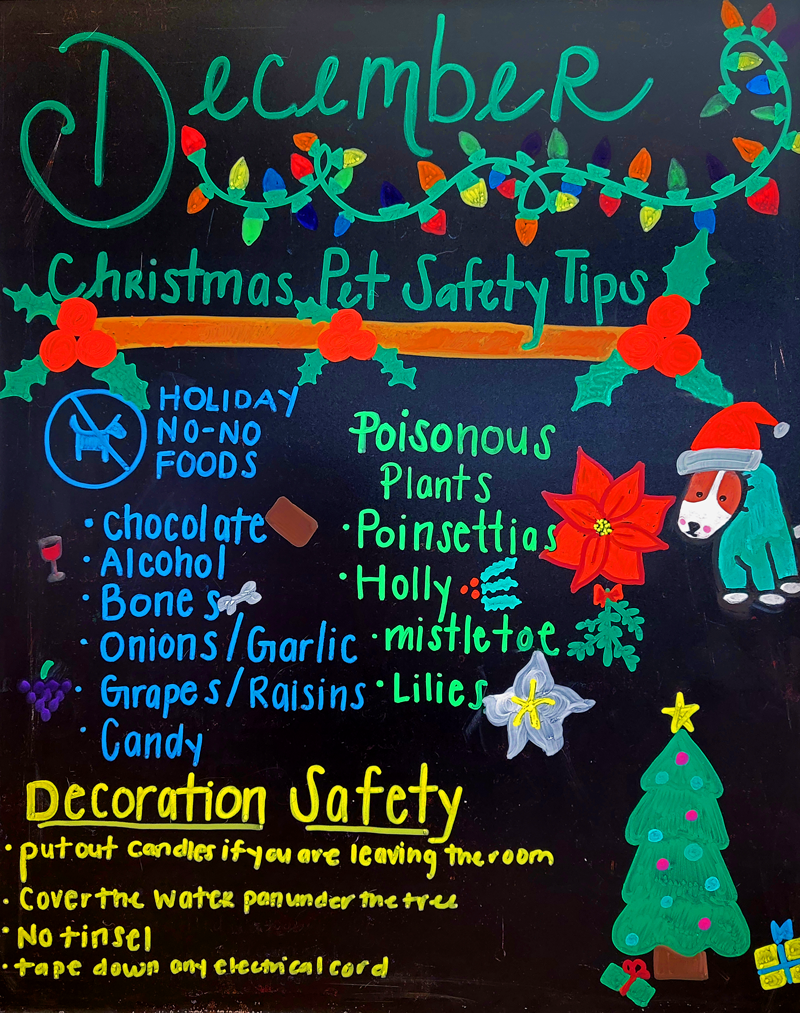
Holiday Food No-No’s
Cats and dogs should never be given any of these food items:
- Chocolate
- Alcohol
- Cooked or raw bones
- Onions or garlic
- Grapes or raisins
- Candy
See more foods on the no-no list…
Poisonous Plants
We believe the risk of pets ingesting a poisonous plant outweighs their beauty. Consider getting artificial versions of these toxic plants:
- Poinsettias
- Holly
- Mistletoe
- Lilies
Check out our Field Guide to Toxic Plants…
Decoration Safety
Sometimes, pets can get a little too interested in decorations and harm themselves. Follow these decoration safety tips:
- Extinguish candles when you leave the room
- For live trees, cover the water bowl underneath
- Don’t decorate with tinsel, which can be very dangerous if pets eat or chew it
- Tape down extension cords, or use a safety cover meant for electrical cords
Get 6 More Pet Safety Tips for the Winter…
Good tidings we bring, to you and your pets! We wish you a Merry Christmas and a Happy New Year! ~from all your friends at Companion Care Animal Hospital
Read More
Why is Xylitol Toxic for Dogs?
October 19, 2023
For Dogs, “Sugar-Free” Foods Can Be a Recipe for Danger
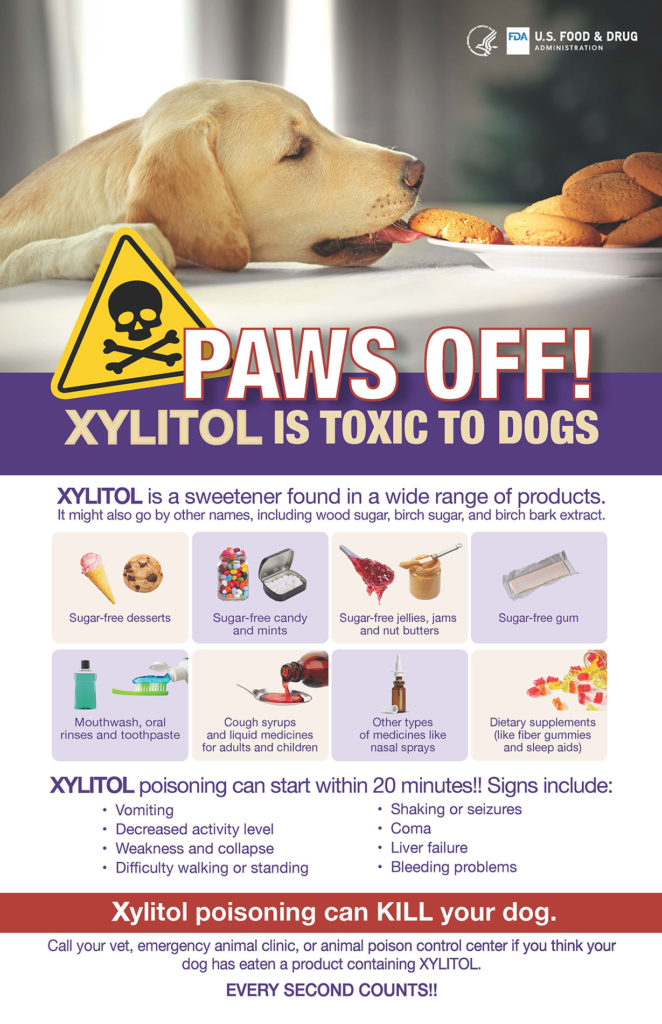
Xylitol is a sugar replacement ingredient to sweeten foods. It can be used in baking and is also found in sugar-free foods and products, like:
- Chewing gum
- Candy
- Baked goods
- Ice cream
- Peanut butter
- Jellies & jams
- Toothpaste
- Mouthwash
- Gummy vitamins & supplements
- Some liquid medicines
- Sunscreen (strangely enough!)
From a veterinary perspective, xylitol is a dangerous substance. It’s highly toxic for dogs, even in small doses. Depending on the size of your dog, even one stick of sugar-free gum could be deadly.
The FDA created this helpful poster with good information, check it out below:
How Xylitol Harms Dogs
Xylitol toxicity works by lowering a dog’s blood sugar to dangerous levels. It triggers a large release of insulin, which makes blood sugar drop.
In some dogs, the substance can also cause irreversible and fatal liver failure.
Signs of Xylitol Toxicity in Dogs
Xylitol toxicity happens quickly, within a few hours of ingestion. Symptoms are common to other ailments, and include:
- Lethargy
- Weakness
- Trouble walking
- Tremors/shakes
- Vomiting/diarrhea
- Seizure
- Coma
- Death
The important takeaway is that minutes matter. If you know your dog ingested xylitol, get veterinary help right away.
Treatment is Possible
In the early stages, treatment for xylitol toxicity is possible. It:
“usually requires a short hospitalization stay with intravenous dextrose supplementation and other supportive medications… For most cases, with proper recognition and treatment, it is favorable as long as the dog has not ingested enough to cause liver damage.”
Xylitol, Also Known As…
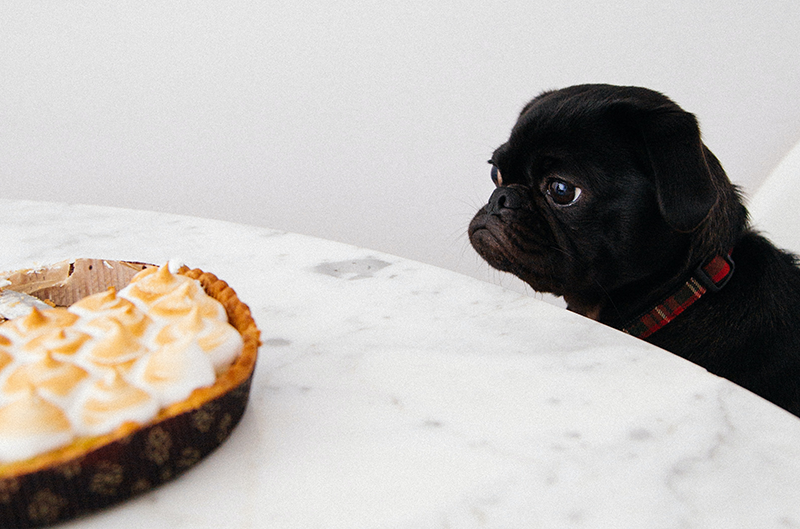
Recently, food brands have started listing xylitol under different names, such as:
- Wood sugar
- Birch sugar
- Birch bark extract
Be especially careful to check the ingredient list of any sugar-free foods to know which contain any of those ingredient names. Keep these foods well away from your dog.
Ruby’s Sad Story
Sadly, dogs die every year from xylitol toxicity. And not everyone knows the danger of this “sugar-free” replacement. Here’s one cautionary tale:
“Ruby stole two of my homemade brownies. Nothing new – she’s stolen them before from sealed boxes, with no adverse affects – but this time I’d cooked with Xylitol. I had no idea that she should be rushed immediately to the vet to begin intensive, invasive treatment which might – just might – have saved her.”
What About Cats & Xylitol?
There’s no evidence at present that xylitol is toxic to cats. However, this doesn’t mean sugar-free foods sweetened with xylitol are safe for cats, either. We recommend keeping xylitol-containing foods away from your cat and to offer known safe cat treats, instead.
Concerned that your pet may have encountered xylitol? Every minute counts. Call us during our regular hours, or reach out to an emergency vet after hours.
Read More