The Risk of Parasite Infection Can Be Right Next Door– At Any Time
Our dogs need protection from several parasites. Credelio Quattro is a chewable tablet that protects against six parasites:
Fleas
Ticks
Heartworms
Roundworms
Hookworms
Tapeworms
This prevention medication is given to your dog monthly as a beef-flavored chewable tablet. It’s a convenient, clean and simple-to-administer solution for protecting your dog from common parasites.
It kills more than 99% of fleas within eight hours, about 97% of ticks within 48 hours and 100% of tapeworms. And it prevents heartworm disease from the first dose.
Companion Care Animal Hospital carries Credelio Quattro in all sizes, and we can provide a discount code to give you the most favorable cost possible. It’s always best to obtain prescription medication from your pet’s veterinarian, so you know the product is legitimate and stored properly.
Here are five of Companion Care Animal Hospital’s dog-specific health articles. Knowing this information as we move into summer can help your whole family enjoy a healthy season.
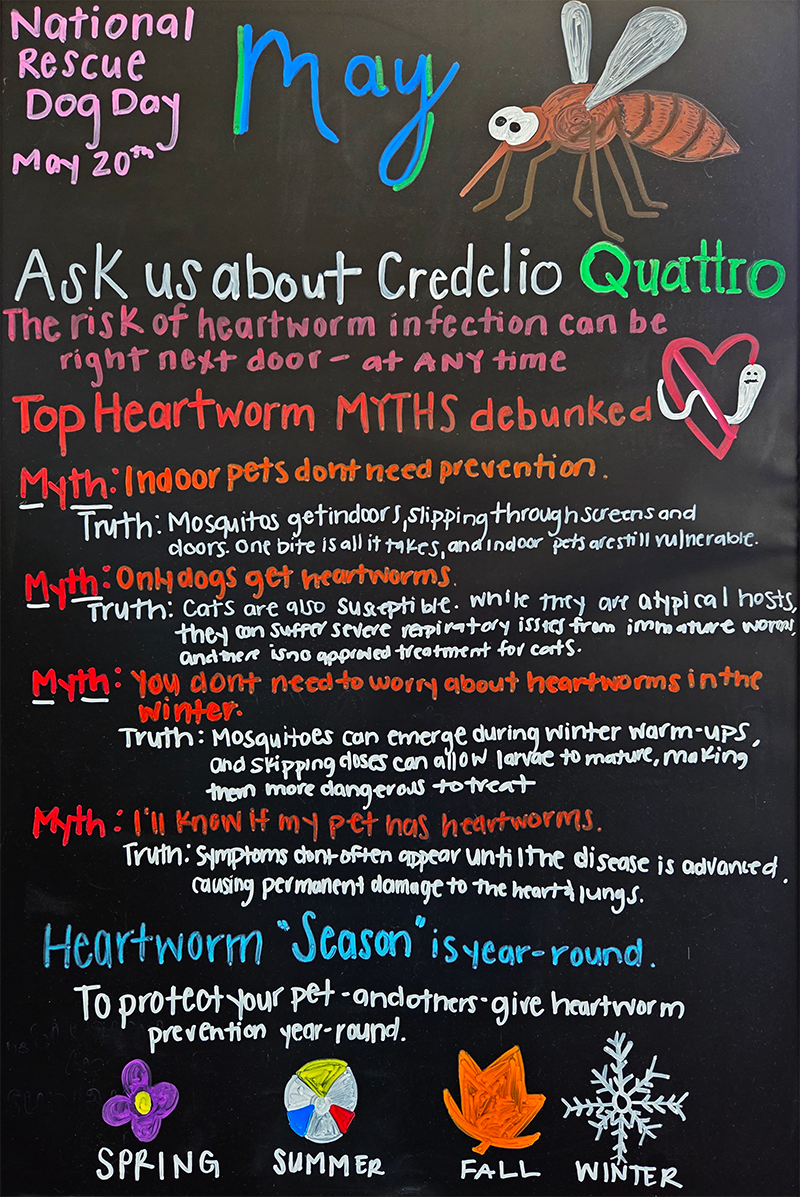
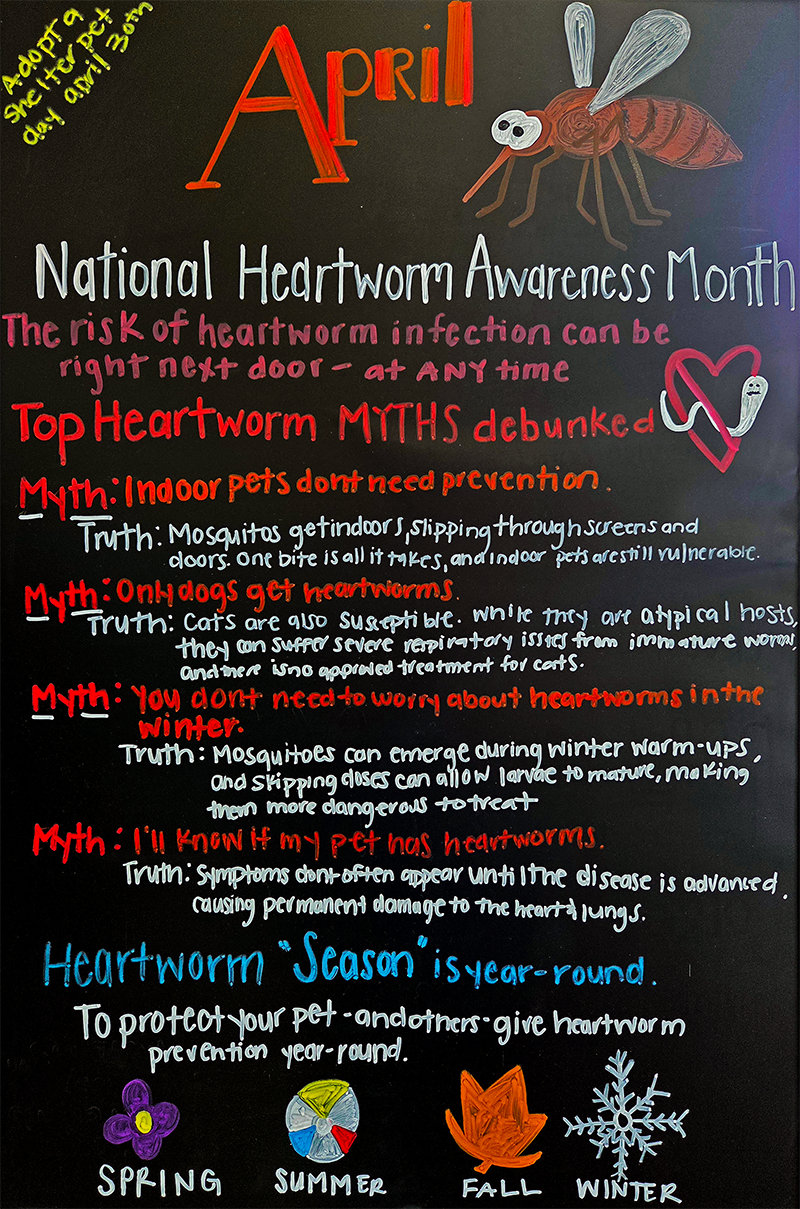
The risk of heartworm infection can be right next door– at any time. Sadly, we encounter several common myths about this deadly parasitic infection that can put pets at risk. Here are the facts we want everyone to know
MYTH: Indoor pets don’t need prevention.TRUTH: Mosquitoes get indoors, slipping through screens and doors. One bite is all it takes, and indoor pets are still vulnerable.
MYTH: Only dogs get heartworm.TRUTH: Cats are also susceptible. While they are atypical hosts, they can suffer severe respiratory issues from immature worms, and there is no approved treatment for cats.
MYTH: You don’t need to worry about heartworms in the winter.TRUTH: Mosquitoes can emerge during winter warm-ups, and skipping doses can allow larvae to mature, making them more dangerous to treat.
MYTH: I’ll know if my pet has heartworms.TRUTH: Symptoms often don’t appear until the disease is advanced, causing permanent damage to the heart and lungs.
Heartworm “season” is year-round. To protect your pet (and others), give heartworm prevention year-round. This includes spring, summer, fall and winter. If you are in need of heartworm prevention, contact us.
The Association for Pet Obesity Prevention reports that 56% of dog owners have tried to help their dogs lose weight, but only 28% of those dogs achieved that healthy weight. For Canine Fitness Month, we want to discuss ways to help your dog get healthier!
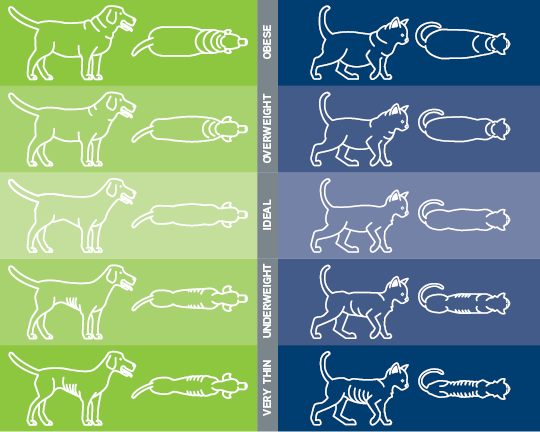
First, What Does a Healthy Weight Look Like for a Dog?
The Body Condition Score is a general tool to assess your dog’s weight. It can help pet owners get a basic idea, although an examination by your veterinarian is important before deciding on any weight loss plan.
If you and your veterinarian have concerns about your dog’s weight, you’ll set a target healthy weight and weigh in at wellness appointments.
What Might Your Veterinarian Recommend for Weight Loss?
Depending on your dog’s size and overall health, your veterinarian may recommend any of the following:
How much to feed your dog each day (it’s probably less than you think).
Weigh your dog’s food instead of using a cup or scoop. Dog food calories are measured by weight, not volume. It’s easy to feed too much at mealtimes.
Feed your dog two or three small meals each day, instead of one larger meal.
Eliminate snacks, if possible. At least, limit snacks to healthy alternatives, like raw carrots and frozen green beans. Treats should make up no more than 10% of daily calories.
If needed, your veterinarian may recommend a specific low-calorie food.
Help your dog achieve about 30 minutes of daily activity, like walking, fetching or active play.
How Do I Help My Dog Become More Fit?
Many dogs are used to leisurely walks that don’t do much for fitness. The Association for Pet Obesity Prevention suggests you work up to a 12 to 17-minute mile with most dog breeds. Here’s what they recommend.
Tips for a successful exercise walk
Start strong: Begin the walk at a brisk pace before your dog gets distracted by smells.
“Out” leg fast, “back” leg slower: Focus on moving briskly on the way out, then allow sniffing and exploring on the return.
Leash control: Keep the leash short, about 3–4 feet, and walk with your dog on your left side or away from traffic.
No retractable leashes: Use a standard leash for better safety and control.
Stay consistent: Don’t stop when your dog tries to pause or mark. Keep walking, tighten the leash slightly (no jerking), and use a simple command such as “Come” or “Here.”
Teaching your dog that this walk is for exercise, not just sightseeing, builds stamina, burns calories, and supports weight loss and overall health. Save casual sniffing for a separate walk or the return trip home.
Do you have questions about your dog’s weight or fitness level? Contact us.
These Small Steps Will Make Great Strides for Your Pet’s Health
A New Year’s Resolution often centers around health and fitness, so why not help your pet have their best year yet?
Make a wellness appointment with your veterinarian: An annual exam is the #1 best thing you can do for your pet’s health
Ask your veterinarian if your pet is a healthy weight:“Up to 63% of pet cats and 59.3% of pet dogs are overweight or obese“
Exercise with your pet 10 minutes per day: This could be a quick walk, or a spirited toy session
Offer healthy snacks instead: Here’s a recipe for Easy peanut butter pumpkin dog biscuits. Also, raw carrots, plain cooked meats or frozen green beans are good options
Have a brushing cuddle sessions once a week: Keep your pet free from matted fur, while also assessing any physical changes that you may want to bring up with your veterinarian
We hope you and your pet enjoy a 2026 of better health and wellness! Contact us if you have any questions about your pet or to schedule the all-important wellness visit.
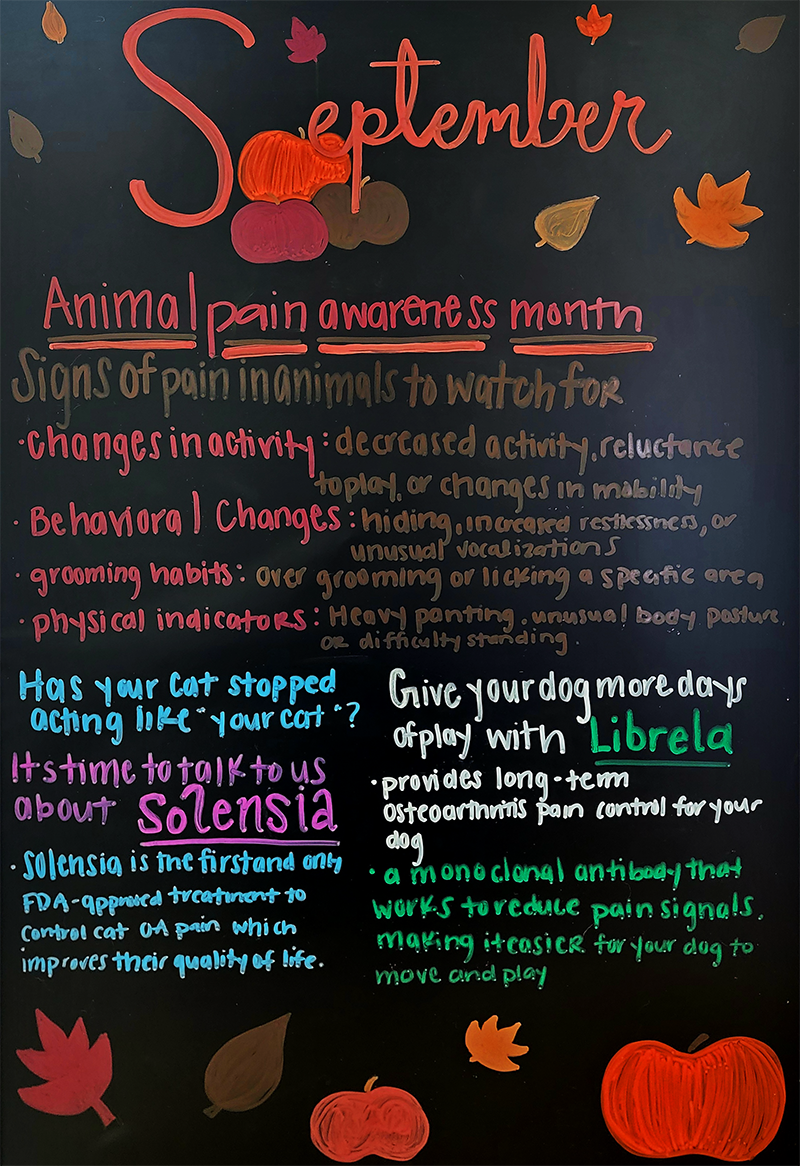
Our pets can’t tell us when they are in pain. In fact, they usually try to hide their pain. Here are the symptoms to look out for:
Changes in activity: Decreased activity, reluctance to play or changes in mobility
Behavioral changes: Hiding, increased restlessness or unusual vocalizations
Grooming habits: Over-grooming or licking a specific area
Physical indicators: Heavy panting, unusual body posture or difficulty standing
Pain in older pets is often due to osteoarthritis, which is swelling in the joints. In the last few years, both cats and dogs have benefited from new treatments.
Has Your Cat Stopped Acting Like “Your Cat?”
It’s time to talk to us about Solensia. This is the first and only FDA-approved treatment to control cat osteoarthritis pain, which improves their quality of life.
Librela provides long-term osteoarthritis pain control for your dog. It’s a monoclonal antibody that works to reduce pain signals, making it easier for your dog to move and play.
Allergies Are One of the Most Common Causes of Itching in Dogs
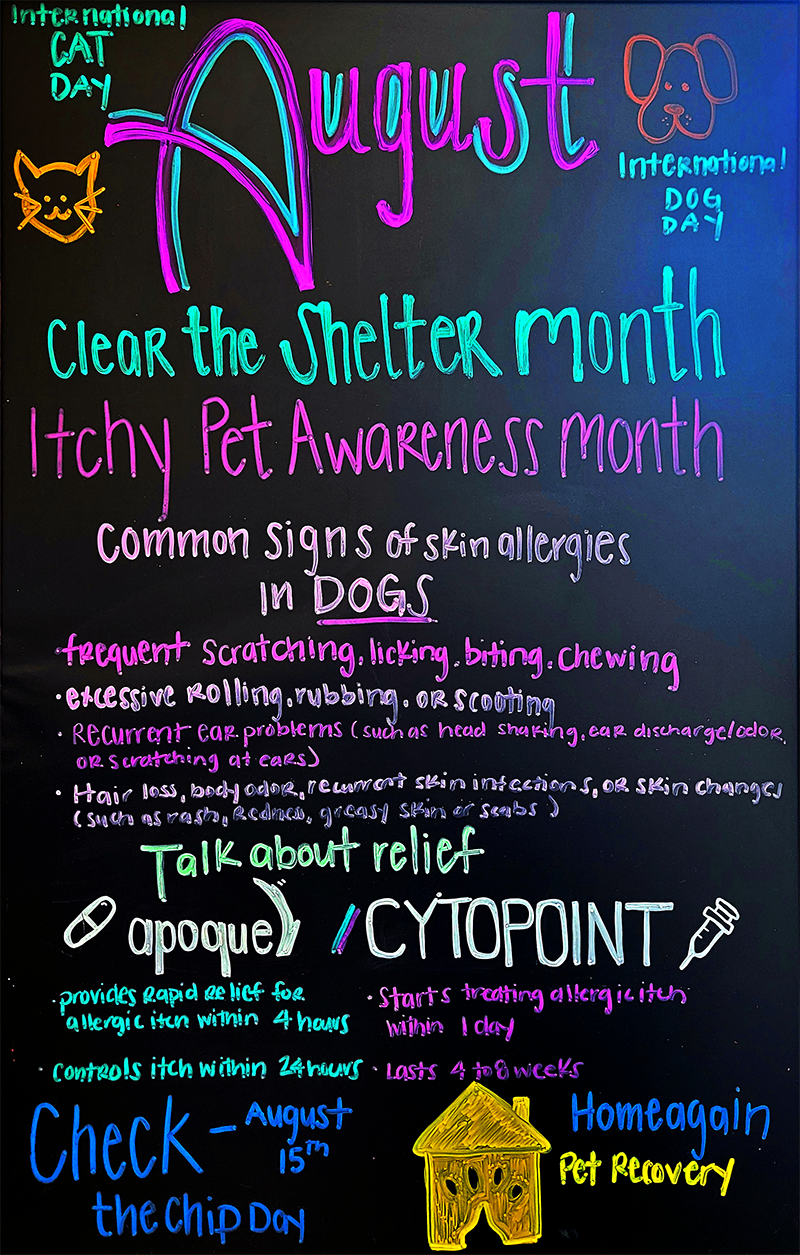
Excessive itching and scratching can be a real health problem for your dog, resulting in abrasions, lost fur and obvious irritation. Allergies are often the culprit for this itching, and these three are the most common:
Food allergy
Environmental allergy
Flea allergy
Signs of Skin Allergies in Dogs
Along with itching, skin allergies may have these other symptoms:
Frequent scratching, licking, biting. chewing
Excessive rolling, rubbing or scooting
Recurrent ear problems (such as head shaking, discharge, scratching at ears)
Hair loss, body odor, recurrent skin infections, or skin changes
(such as rash, redness, greasy skin or scabs)
Get Itch Relief for Your Dog with Cytopoint
If your dog suffers from environmental allergies, there’s a medicine that we’ve seen success with. Cytopoint has helped eight million dogs get relief from allergic dermatitis or atopic dermatitis. Here’s a brief overview of this injection:
Provides rapid relief for allergic relief within four hours
Does your dog suffer from allergic itching? If we’ve ruled out food or flea allergy, it could be in the environment. Contact us to talk about how to help your dog find relief.
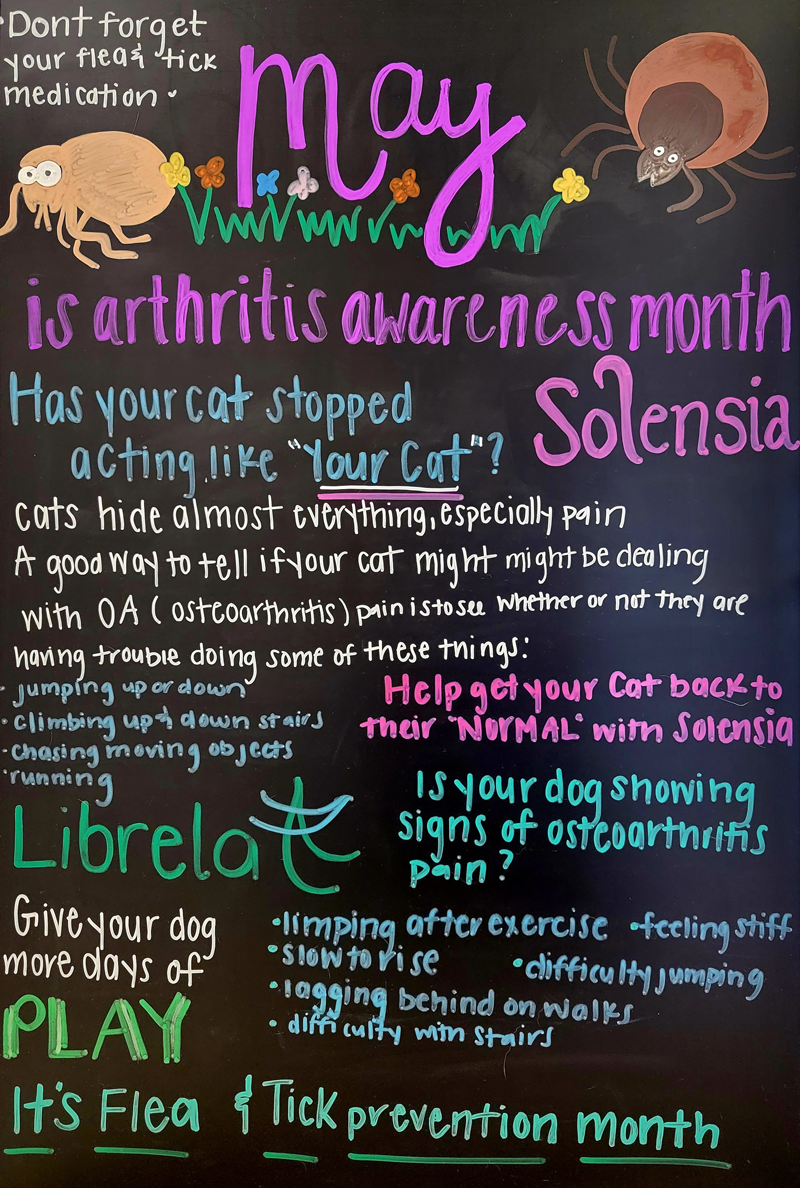
May is Arthritis Awareness Month, and we are bringing awareness to two newer medications that are helping cats and dogs with significant pain relief associated with osteoarthritis.
Cats hide almost everything, especially pain. A good way to tell if your cat might be dealing with osteoarthritis (OA) pain is to assess if they are having trouble doing some of these things:
Jumping up or down
Climbing up and down stairs
Chasing moving objects
Running
You can help get your cat back to their “normal” with Solensia. It’s a monthly injection administered here in the office, and your cat processes the medication like naturally-made antibodies.
Librela for Dogs Suffering with Osteoarthritis
Your dog’s “slowing down” might not be a natural result of aging. It could be pain. Is your dog showing signs of osteoarthritis (OA) pain?
Limping after exercise
Slow to rise
Lagging behind on walks
Difficulty with stairs
Feeling stiff
Difficulty jumping
Give your dog more days of play! Ask us about Librela. This monthly injectable has given many dogs relief from pain and helped them live more active lives. And it’s safer than some other pain relief options, because your dog processes the medication like natural antibodies.
It’s important to know that there’s no cure for OA, but these new medications help manage the pain from the disease. We’ve experienced great results in our patients, and we’d love to talk with you about the possibilities. Contact us.
During the week of May 4-10, 2025, the American Veterinary Medical Association (AVMA) sponsors National Pet Week. AVMA suggests a few lifecycle themes to focus on:
Choose Well: Commit for Life
Behavioral Health: Good Habits
Nutrition & Exercise Matter
Love Your Pet? See Your Vet!
Planning for Senior Care
National Pet Week from AVMA: Choose Well to Commit for Life
The first step to happiness and good health is to choose the right pet for your family and to commit to caring for the animal for its years of life. Consider these questions before bringing a new pet home.
Will this pet fit with your family’s lifestyle? Cats, dogs and other pet species all have different needs, temperaments, hardiness and health considerations. For instance, a bunny does best in a quiet, calm home. Many dog breeds need lots of physical exercise and active play. Cats need a home free from the many houseplants that are toxic to them.
Do the adults in your family have time to care for this pet? Each and every day, your pet will need basic care like feeding, elimination, cleaning, exercise and more. And for a happy life, your pet will need socialization and enrichment. Children are quick to promise responsibility, but the adults are truly responsible for family members. Also, consider how long the pet will need to spend time alone, such as when you’re at work.
Are you comfortable with the costs of caring for this pet throughout its life? Food, housing, veterinary care, gear, toys, petsitting, grooming and more really add up. AVMA offers this guide: Money Tips for Caring Pet Owners
Will a new pet thrive with any existing pets? If you already have one or more pets in your home, you’ll want to consider if the new pet will be welcomed by them.
National Pet Week from AVMA: Behavioral Health with Good Habits
For dogs and cats, socialization and training are critical to enjoying these animals throughout their lifetimes. Shelters are full of unfortunate pets who were allowed to develop bad habits. Watch this socialization video from AVMA, and check out the resource Socialization of Dogs and Cats.
National Pet Week from AVMA: Nutrition & Exercise Matter
For today’s pet, maintaining a healthy weight is a top consideration. It’s easy to feed a pet more than is healthy for them (treats are so much fun!). AVMA shares a helpful guide for how to tell if your pet’s weight is healthy.
National Pet Week from AVMA: Love Your Pet? See Your Vet!
Regular wellness exams are so important for promoting your pet’s long, healthy life. Preventive care keeps your pet safe from dangerous illnesses through immunization and heartworm/flea/tick protection. And the earlier your veterinarian can catch and treat disease, the better the outcomes will be.
National Pet Week from AVMA: Planning for Senior Care
Cats are usually considered senior at 10 years old, while senior status for dogs varies by breed and size. (from six to 11 years old). Companion Care Animal Hospital has several Senior Pet Resources we recommend you look into. AVMA also offers a Caring for Senior Cats and Dogs feature with more information.
We want to emphasize that senior pets have many benefits over younger pets, so it’s not all about extra veterinary care. These pets are usually more relaxed and have fewer unwanted behaviors.
As you celebrate National Pet Week, we hope these lifecyle tips have been helpful. If you want to learn more about pets and their care, browse through our blog.
The first full week of May recognizes Dog Anxiety Awareness Week. Like humans, dogs can also suffer from anxiety. To promote awareness, we’ll discuss the kinds of anxiety that dogs feel, the symptoms you may notice and how to help an anxious pup.
Types of Anxiety in Dogs
Anxiety typically has a specific cause in dogs– and the cause can be unique to each dog. A Finnish study of over 13,000 dogs found that 73% of them had at least one behavioral problem linked to anxiety. The American Kennel Club identifies these three common types:
Fear-related anxiety
Separation anxiety
Aging-related anxiety
Dogs can develop a fear of anything. If they associate an item, sound, person or animal with negative outcomes, they will become afraid of it. This fear can turn into aggression or other debilitating behavioral results.
Dogs with separation anxiety are unable to calm and comfort themselves when left alone. These dogs can become destructive to themselves and their surroundings.
Some older dogs develop anxiety as they age. It could be that the dog’s mental capacities deteriorate, leading to confusion.
Symptoms of Stress & Anxiety in Dogs
PetMD shares a comprehensive list of stress symptoms, including:
Pacing
Shaking
Panting
Rapid heart rate
Frequent yawning
Drooling with lip licking or smacking
Excessive behaviors, like licking, barking or chewing
Dilated pupils with rapid blinking
On-the-alert behavior
Hiding
Bathroom accidents
Refusal to eat
Unhealthy shedding
Sometimes, a dog’s behavioral anxiety symptoms develop gradually. They can be easy to miss and you may think, “That’s just how my dog is.” But knowing the many symptoms of stress and anxiety can help you take steps to help your dog lead a calmer, more confident life.
How to Help Your Dog with Stress & Anxiety
A dog’s anxiety is often the result of building bad habits over time (compared with a single bad experience that sticks with a dog for life). Training, counterconditioning, and desensitization are all proven methods for treating stress and anxiety, no matter the cause. It’s good to seek professional training help. Check out our article “National Train Your Dog Month” for local resources.
It’s also possible to change your dog’s environment to avoid stress triggers. For instance, if your dog is anxious around strangers, don’t take them to crowded places.
Training and environment management may not be enough to help some anxious dogs. There are a few anti-anxiety veterinary medications on the market that could help. Contact us if you’d like to start a conversation with your veterinarian about your dog’s anxiety.