A Few Reminders to Help You Enjoy a Wonderful Holiday Season with Your Pets
We excited to be entering the holiday season! Here’s a roundup of our most useful advice for keeping your cats and dogs safe through the holidays.
5 Holiday Foods that Are Safe Pet Treats
When we treat ourselves, we also want to treat our pets! These are healthy treat options from the holiday table. Remember, treats are good in moderation, so think in bites, not bowls.
Plain Cooked Lean Meat, Poultry or Fish
Raw Baby Carrots or Frozen Green Beans
Plain Scrambled or Boiled Eggs
All-Natural Peanut Butter
Plain, Cooked Pumpkin, Canned or Cubed
20 Foods & Ingredients to Keep Away From Your Pet
On the other hand, there are plenty of foods that are dangerous to share with pets. Never give your pets these items:
Raw meat, poultry or fish
Cooked or raw bones
Onions
Garlic
Chives
Leeks
Avocados
Mustard – the seeds, powder or condiment
Raw yeast dough
Raisins and grapes
Nuts
Green tomatoes
Raw potatoes
Alcohol
Chocolate
Caffeine
Candy and gum
Macadamia nuts
Pecan pie
Anything containing the artificial sweetener xylitol
Dangerous Holiday Pet Pictures You Should Never Take
Holiday pet photos are darling, and we love them as much as anyone. However, it’s never the right time to put a pet in danger for a picture. Here are basics guidelines:
No tinsel or ribbon
No toxic plants
Absolutely no alcohol
Avoid light strings
Avoid toxic foods
Christmas Decoration Safety
Decorating is half the fun of the season! Here’s some guidance for mixing pets and pretties:
Secure Your Christmas Tree to the Wall
Keep Tree Water Clean and Fresh
Avoid Tinsel with Cats
Salt Dough Ornaments Are Toxic
Keep Glass Ornaments Out of Reach
Keep Batteries Out of Reach
Unplug Your Christmas Tree when You’re Out of the Room
Extinguish Candles when You Leave the Room
Avoid Decorating with Toxic Plants
Keep Potpourri Away from Pets
Cats Often Try to Eat Confetti
Noisemakers Disturb Many Pets
Fireworks are a Dog’s Worst Enemy
We hope you and your pets enjoy the holidays! Contact us with any questions.
From Foods to Decorations to Guests, Follow These Tips this Season
Christmas, New Years and all the winter holidays can pose some challenges for keeping your pet safe. Keep these simple tips in mind for happy holidays.
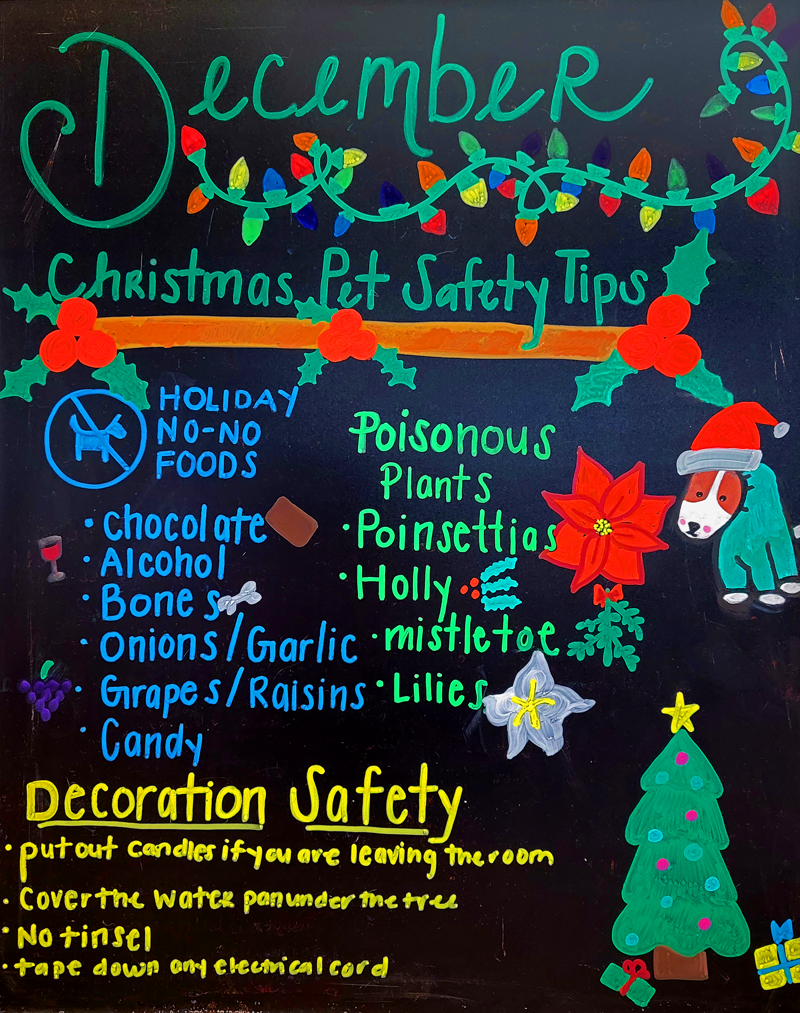
Holiday No-No Foods
These foods are dangerous for pets and need to be kept away from them.
Chocolate
Alcohol
Bones
Onions
Garlic
Grapes/raisins
Candy
Cooked bones
Poisonous Plants
Festive Christmas plants can also be dangerous for curious pets. Consider artificial replacements for:
Poinsettias
Holly
Mistletoe
Lilies
Decoration Safety
Everyone loves beautiful holiday decorations! Follow these guidelines for decor that both people and animals can enjoy.
Put out candles if you are leaving the room
Tape down any electrical cords
Avoid tinsel
Cover the water pan under the Christmas tree
Managing Your Pet Around Guests
Help help your pets successfully interact with guests takes a little planning. Here are some ideas.
Make sure their ID tags are up-to-date
Hold onto your pet as people enter the house
Introduce your guests to your pet
Teach kids the proper way to treat a pet
Make sure nobody feeds them from the table
Give your pets a safe place to get away and have quiet time
Cold Weather Safety
For outdoor pets, make sure to offer fresh (unfrozen) water, warm bedding and wind-free shelter
Keep your pet away from antifreeze and other cold-weather chemicals like de-icers
Remember that elderly and infant pets are the most vulnerable to cold
Spooky season is here, and people love it! About 60% of Americans celebrate Halloween. But 0% of pets enjoy being frightened, so let’s review some safety tips.
Candy is Never Good for Pets
For the health and safety of your cat or dog, keep all candy away from them. Chocolate candy or sugar-free candy are toxic, while sticky candies can become stuck in teeth or digestive tracts. Here are some tips to help your pet avoid the candy:
Make sure your kids understand that sharing candy with pets is dangerous
Put the trick-or-treat bowl out of reach of your pet
Store bags of candy in a cabinet your pet can’t reach
If you have your leashed dog at a Halloween event, watch the ground for dropped candy
Costumes Aren’t for Every Pet
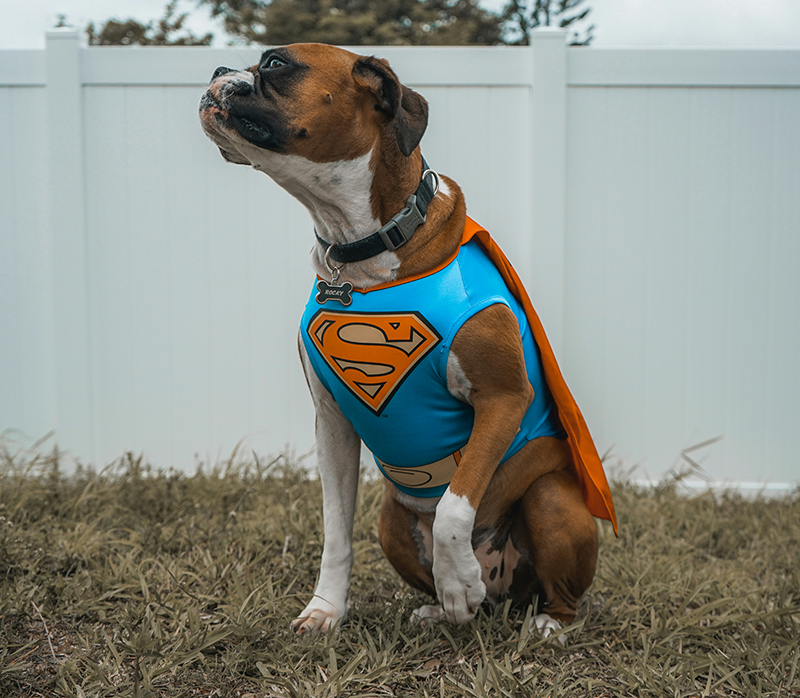
We love seeing dressed up dogs and cats as much as anyone– they are just so cute in costumes! But not every pet wants to join in the fun. If your pet resists wearing a costume, don’t force it. Here are more costume guidelines:
Don’t put a mask on your pet for any length of time, even if your pet doesn’t seem to mind. Just long enough to snap a cute pic.
Choose a comfortable costume that isn’t too tight and allows normal movement (walking, sitting, lying down).
If your pet shows any discomfort or irritation, remove the costume right away
Home is the Safest Place
Halloween celebrations often happen at night, with large crowds. This experience isn’t for most pets, who are safest and happiest indoors at home. If you’re welcoming trick-or-treaters or going to a party, create a safe space in your home where your pet won’t come face-to-face with strangers.
For more Halloween safety tips, check out these articles:
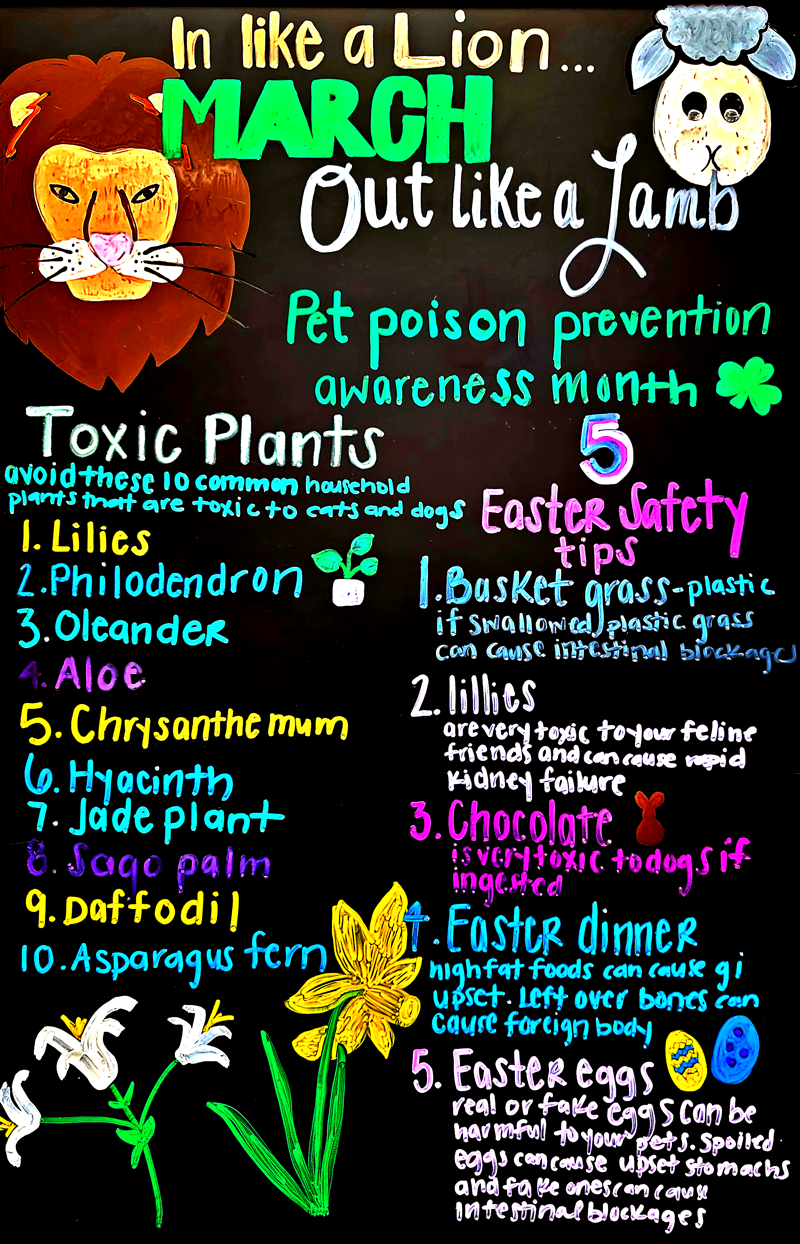
Easter is early this year, so it coincides with Pet Poison Prevention Awareness month in March. Keep these five tips in mind as you plan your celebrations.
Plastic basket grass: If your pet swallows plastic grass, it can cause intestinal blockages.
Lilies: These plants are very toxic to your feline friends and can cause rapid kidney failure.
Chocolate: This food is very toxic to dogs if ingested.
Easter dinner: High-fat foods can cause GI upset. Leftover bones can cause foreign body (an object that becomes stuck in your pet’s body that shouldn’t be there).
Easter eggs: Real or fake eggs can be harmful to your pets. Spoiled eggs can cause upset stomachs and fake one can cause intestinal blockages.
10 Common Plants Toxic to Pets
Know these common plants that are toxic to cats and dogs. We recommend that you don’t keep the in your home.
Lilies
Philodendron
Oleander
Aloe
Chrysanthemum
Hyacinth
Jade plant
Sago palm
Daffodil
Asparagus fern
You may also want to check out “Top 20 Pet Toxins in Ohio.” Let’s enjoy spring with our pets, and keep everyone safe.
Christmas and the whole holiday season are usually a busy time– a happy sort of hectic. And our pets often join in on the fun, as we decorate the house and make festive recipes. Here are some reminders of common dangers to avoid during all the hustle and bustle.
Holiday Food No-No’s
Cats and dogs should never be given any of these food items:
Good tidings we bring, to you and your pets! We wish you a Merry Christmas and a Happy New Year! ~from all your friends at Companion Care Animal Hospital
Save the Spooky for the People,
and Help Your Pets Feel Safe
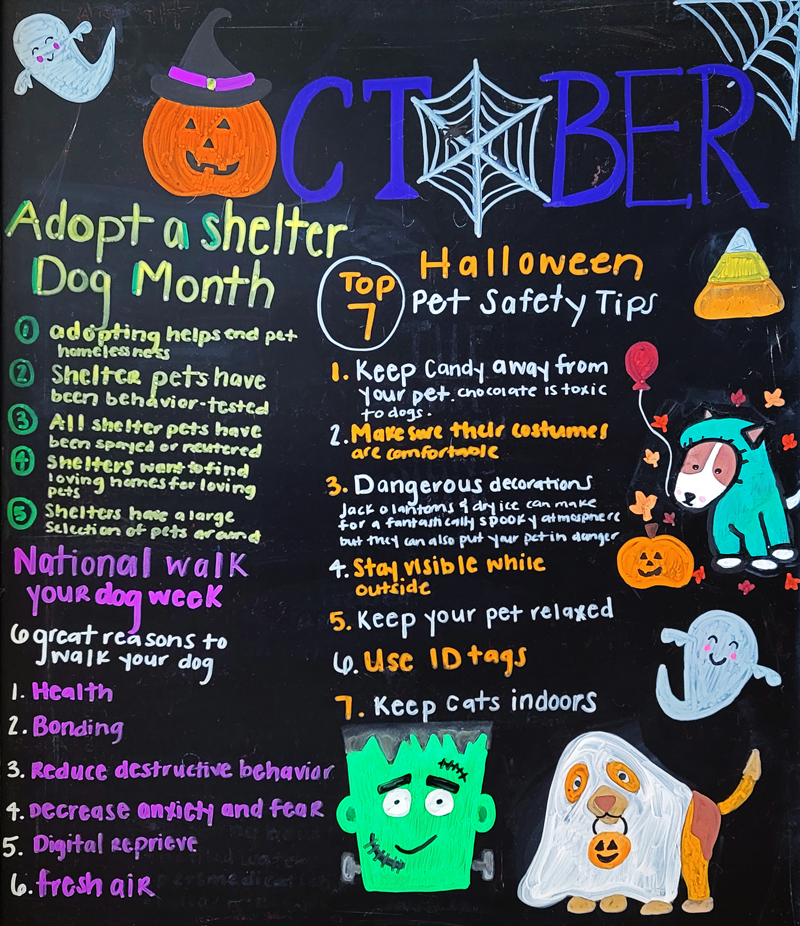
Halloween can be especially scary for pets, as trick-or-treating invites multiple “strangers” to ring your doorbell. Their home is typically their calm base, and suddenly it’s chaos. Consider these seven tips for making the holiday more enjoyable for your pets.
Keep candy away from your pet. Chocolate is toxic! And all candy is bad for your pet. Offer pet treats instead.
Make sure their costumes are comfortable. And frequently check to make sure your pet isn’t endangered how the costume fits them, i.e., too tight around the neck (and if your pet hates costumes, consider letting them just celebrate in spirit).
Avoid dangerous decorations. Jack-o-lanterns and dry ice can make for a fantastically spooky atmosphere, but they can also put your pet in danger
Stay visible while outside. Wear light-colored clothing, or lights on your person and pet’s harness.
Help your pet stay relaxed. Give them a space of their own to feel safe. Consider playing music or TV for them to help cover the noise of celebrations.
Use ID tags. Halloween is frightening for pets in all the wrong ways, and they may escape from opened doors or backyards.
Keep cats indoors. Not only will the hustle-and-bustle of trick-or-treating alarm them, but Halloween may be a dangerous night for cats to be victimized.
Save the Creepy, Spooky Scares for People: Help Your Pet Have a Happy Halloween
Like many holidays, Halloween celebrations are fun for people, but sometimes stressful for pets. Imagine it from an animal’s perspective: Being wrangled into a costume while a bunch of strangers come to your door for candy you want but aren’t allowed to have.
Not much fun, right?
While Halloween is probably not any pet’s favorite holiday, here are the top seven tips to follow to make it safe and comfortable:
Keep candy away from your pet. All candy is bad for your pet, and some kinds are toxic.
Beware dangerous decorations like jack-o-lanterns with lit candles inside or dry ice.
Stay visible while outside. If you take your dog on a walk during Halloween night, wear reflective clothing or strips, and carry a lantern or flashlight.
Help your pet to stay relaxed. Trick-or-treaters coming to the door can be scary for pets. Ways to calm your pet are to give them their favorite treats and toys, provide a safe space away from the front door, and give them plenty of affection.
Put a collar with ID tags on your pet and consider microchipping. With opening doors and outdoor fun, it can be easier for your pet to get lost.
Keep cats indoors. During trick-or-treating, consider giving your cat their own space in a closed-off room. If you sit outside on your porch or driveway with candy for the kids, you can avoid opening the door altogether.
Cuddle on the couch to watch a scary movie. Don’t worry, your pet won’t be spooked, but they will be there to comfort you!
Get a new Halloween-themed toy for your cat or dog.
Play Hide-n-Go-Treat. No tricks, just treats! Hide your pet’s favorite treat and see how long it takes for them to sniff it out.
Include your dog on your family’s outing to the pumpkin patch. Just call ahead to make sure a leashed pet is OK.
Halloween starts the fall and winter holiday season. Check out our Holiday Pet Safety resources for guidance on Thanksgiving, Christmas and New Year’s celebrations.
“Americans are hitting the road and heading to airports. 42% will travel between Thanksgiving and mid-January. Two-thirds of travelers will fly and/or stay in paid lodging, while one-third will only drive to visit friends and relatives.
“For many, the holiday season means multiple trips to enjoy school or work breaks; Travelers are taking an average of two trips. For three in four, the longest trip will be a week or shorter. The season will get off to a fast start, with three in 10 trips slated for the Thanksgiving weekend.”
Here’s our guide to holiday travel with your pet– and when it might be best for your pet not to travel.
Roadtrips with Your Pet
Follow these tips if you’re planning a trip “over the river and through the woods to Grandmother’s house…”
Never leave your pet alone in the vehicle, whether the weather is hot, cold or seems nice. Parked vehicles quickly get too hot or cold, and this is deadly for animals (and people!)
When stopping for meals, go to restaurants with drive-thru or carryout options, so you can eat in the car or at a rest area with your pet.
Pack for your pet– remember to include anything they might need for health and comfort, like medicines, food, water, water bowl, leash, collar, bed, blanket, etc.
Ask your veterinarian what sort of car harness or restraint would be best for your pet.
It’s not particularly well known that driving between states with your pet is subject to requirements. The AVMA gives more detail:
“Interstate and international travel regulations require any pet you bring with you to have a health certificate from your veterinarian – even if you are traveling by car. Learn the requirements for any states you will visit or pass through, and schedule an appointment with your veterinarian to get the needed certificate within the timeframes required by those states.”
Flying with Your Pet
Flying with a pet is difficult and sometimes distressing or dangerous for the animal. First, decide if air travel is really the best option, or if you should plan for a pet sitter or boarding facility instead.
Each airline has their own pet policy, and these policies may change without notice. Before you book your flight, make sure you understand everything that is required. Then, before you leave for the airport, make sure you check the policies again.
Remember, your pet will need to eat, drink and use the bathroom while you’re in the travel process. Learn where your pet is welcome at each airport you’ll be stopping at.
Staying with Friends and Family with Your Pet
If your host is OK with you bringing your pet, also make sure they are OK with these guidelines:
Don’t feed your pet, unless they ask permission first
Don’t let your pet outside without you knowing about it
Provide a safe and comfortable place for you pet to sleep
Go through an introduction with your pet and any pets your host may have, to help them get comfortable with each other
Allow you to pet-safe the pet’s environment, especially considering these Pet Holiday Safety Tips
Most of all, be a good guest. Make sure to take responsibility for your pet at all times. If you sense that your pet might not be welcome, respect that and make arrangements for a pet sitter or boarding facility.
Staying in Hotels or Lodging with Your Pet
Planning ahead is key if you plan to stay at a hotel, resort, AirBnB or campground with your pet. Before you book, make sure your pet will be allowed. After you book:
Follow all pet policies the owner puts in place
Try not to leave your pet alone in the lodging, as this will probably cause agitation
If you need to leave your pet alone, make sure they are in a safe place like a crate. If you’re staying in a hotel, place the Do Not Disturb tag on the door and alert the front desk that your pet is in the room
Always keep your pet on a leash in public or outdoor spaces
Always clean up after your pet
Make sure to bring or buy enough food for your pet
Locate the nearest emergency veterinary hospital, even though you hope you won’t need it
If you’re planning a trip with your pet this season, we wish you safe and happy travels!
More Get-Togethers Mean More Opportunities for Risk to Your Pet
With Thanksgiving, Christmas, Hanukkah, Kwanzaa, New Year’s and more coming up, many are planning get-togethers that they might have missed out on in 2020.
It’s exciting to be able to gather with family and friends! And let’s remember some important safety tips for our animal family that may have slipped our minds while we were social distancing.
Holiday Safety Tips for All Animals
Many think of the classic movie Christmas Vacation as a comedy. We view it as a cautionary tale for pet safety. Don’t be a Griswold– follow these tips.
Decorating with live plants may be beautiful, but it can also be deadly for curious animals. Poinsettia, holly and mistletoe are all poisonous
Tape down electrical cords and wires to prevent your pet from chewing or becoming tangled in them
Avoid using tinsel– it’s too tempting to chew on and ingest
If you have salt dough ornaments, hang them high out of your pet’s reach. They are toxic
Don’t leave candles burning when you leave the room
If you have a live Christmas tree, cover the water bowl
It’s easy for pets to escape when the door is opening to let guests in. Keep hold of your pets, and make sure their tags are up-to-date
Make sure your guests know not to feed your pet anything from the table
Make sure children know how to safely interact with your pet
Foods Toxic to Pets
There are so many “people foods” that cause toxicity in pets that they deserve their own list. You likely wouldn’t feed most of these foods to your pet on purpose, but your pet is always watching for dropped food while you’re cooking, cleaning up or eating.
Avoid letting your pet eat or drink:
Alcoholic beverages
Apple seeds – although apple slices are a great treat, the seeds contain cyanide
Avocado
Bones – cooked or raw
Chocolate
Caffeine
Fruit pits
Garlic, onions and chives
Grapes and raisins
Hops
Nuts
Milk and dairy
Moldy foods
Mustard seeds, powder or condiment
Nicotine – make sure pets can’t access ashtrays
Raw or undercooked meat, fish, eggs or bones – animals are susceptible to Salmonella and E. coli, just like people
Salty snacks
Xylitol – an artificial sweetener found in some gum, candy and vitamins
Yeast dough
Holiday Safety Tips for Cats
Be especially aware of these cat-specific safety concerns.
Cats especially need a quiet hideaway when lots of people are around. Make sure there’s a quiet room or place in your house where your cat can go that people can’t
Lilies aren’t typically a huge part of winter celebrations, but remember that all lilies are extremely poisonous to cats
Onions, garlic and chives are especially toxic for cats
Green tomatoes and potatoes are also bad for cats
Holiday Safety Tips for Dogs
And dogs need special attention for their safety, too.
Wow! There is a lot to remember about keeping your cat or dog safe during the holidays. But also remember to have fun and spend quality time with your pet! (Like you would ever forget that!)
When it comes to Thanksgiving, overindulgence is often the order of the day for humans. And it’s natural to want to share the bounty with our furry family.
Food Safety Tips for Pets
Over-rich food can endanger cats and dogs, especially since Thanksgiving favorites are often made with ingredients that are toxic to pets.
Fatty foods are hard for animals to digest and can cause pancreatitis, a life-threatening condition for pets. For your pet’s health, don’t feed them turkey skin or other high-fat foods.
Also, many common ingredients are toxic to cats and dogs, like onions, raisins, garlic, grapes, nutmeg, chocolate, xylitol and more. Sweet potato pie, stuffing, mashed potatoes, pecan pie, pumpkin pie and cakes– all of these are on the DO NOT EAT list for pets.
Party Safety Tips for Pets
While you may not be having a large Thanksgiving gathering this year, still be vigilant about these risks that pets face when any guest visits.
Watch for open doors and ways of escape. Pets can be very tricky when they want to get outside unnoticed, and they might sneak around a guest entering the house.
Keep food and alcohol out of your pet’s reach. Guests should be careful about where they set plates and cups. Also, make sure your pet isn’t able to get in the trash and find something dangerous to eat.
We know you’ll be thankful for your pet this Thanksgiving!